Хабр USA Russian tech minds, American ambitions

Хабр USA

Russian tech minds, American ambitions

Latest Articles

The Cryptographers You've Never Heard Of Are Keeping Your Bank Account Safe
Industry Trends

The Cryptographers You've Never Heard Of Are Keeping Your Bank Account Safe

Behind the encryption protecting your financial transactions, medical records, and sensitive government data sits a surprisingly concentrated pool of talent with roots in Soviet-era mathematics departments. These are the cryptographers nobody talks about — and they're quietly holding American digital infrastructure together.

The Code Review Comeback: How a 'Bureaucratic' Soviet Practice Became Silicon Valley's Hottest Engineering Trend
Industry Trends

The Code Review Comeback: How a 'Bureaucratic' Soviet Practice Became Silicon Valley's Hottest Engineering Trend

For decades, American engineers waved off rigorous peer-review processes as slow, overly formal, and frankly un-American. Now Google, Meta, and a growing list of US tech giants are quietly borrowing a page from Soviet-era computer science labs — and the results are hard to argue with.

Shift Left, Test Hard: How Soviet-Era QA Philosophy Is Fixing America's Broken Software Release Cycle
Industry Trends

Shift Left, Test Hard: How Soviet-Era QA Philosophy Is Fixing America's Broken Software Release Cycle

Major US tech companies are quietly overhauling their quality assurance pipelines, borrowing heavily from formal verification traditions rooted in Soviet-era computer science. The shift is less about nostalgia and more about cold, hard economics — production failures are expensive, and lighter Agile-era testing approaches haven't kept pace with system complexity. Here's what's actually changing on the ground.

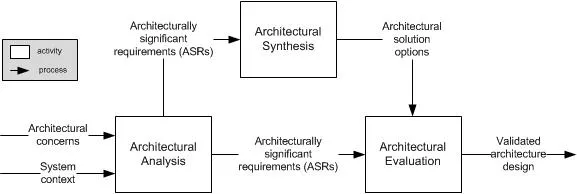
The 'Think First, Code Later' Revolution Quietly Reshaping American Engineering Teams
Industry Trends

The 'Think First, Code Later' Revolution Quietly Reshaping American Engineering Teams

A growing number of US tech companies are restructuring their engineering cultures around a philosophy deeply embedded in Russian and Soviet mathematical tradition: exhaustive problem analysis before a single line of code gets written. The results, in several documented cases, are faster delivery cycles, fewer architectural rewrites, and engineers who actually understand what they're building. So why isn't anyone talking about where this approach came from?

The Invisible Talent Pipeline: How Silicon Valley Keeps Tapping Eastern European Engineering Talent
Industry Trends

The Invisible Talent Pipeline: How Silicon Valley Keeps Tapping Eastern European Engineering Talent

Despite geopolitical headwinds and visa bureaucracy, American tech giants are quietly building remote-first pipelines to access elite Russian software engineers. Here's what's really driving the trend — and what it means if you're a developer on either side of the equation.

From Moscow Classrooms to Pentagon Contracts: The Quiet Cybersecurity Pipeline Nobody Talks About
Industry Trends

From Moscow Classrooms to Pentagon Contracts: The Quiet Cybersecurity Pipeline Nobody Talks About

US tech giants and federal agencies have been quietly recruiting cybersecurity talent from Russian universities for years, drawn by a pedagogical tradition that treats cryptography like a martial art. The post-2022 geopolitical landscape has made this pipeline more complicated — but not necessarily smaller.

The Algorithm Whisperers: How Soviet Math Culture Built Silicon Valley's AI Backbone
Industry Trends

The Algorithm Whisperers: How Soviet Math Culture Built Silicon Valley's AI Backbone

Walk the halls of any major AI lab in the Bay Area and you'll hear a familiar pattern: names like Sergei, Dmitri, Natasha, and Alexei attached to some of the most groundbreaking machine learning work happening today. This isn't a coincidence — it's the downstream effect of a decades-long educational philosophy that treated mathematics less like a school subject and more like a martial art.