How Well-Funded Startups Keep Building Expensive Houses of Cards — And Why Eastern European Engineers See It Coming
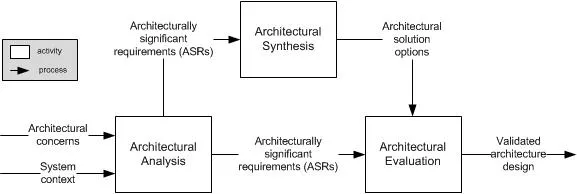
Photo: Antonystang, CC BY-SA 3.0, via Wikimedia Commons
There's a particular kind of post-mortem that keeps appearing in Silicon Valley engineering blogs. The company raised a Series B, scaled aggressively, and then — somewhere around the eighteen-month mark — discovered that their core data pipeline was held together with duct tape and optimism. The rewrite costs millions. Sometimes it kills the product entirely.
What's quietly remarkable is how often engineers from Eastern European backgrounds — brought in as consultants, hired mid-crisis, or simply watching from the outside — saw exactly this coming. Not because they're smarter. Because they were trained to think about systems differently from day one.
The Problem With Infinite Runway Thinking
When capital is abundant, a certain kind of architectural laziness becomes rational. Why spend three weeks debating database schema when you can ship in three days and "deal with it later"? The American startup ecosystem, for all its genuine strengths, has a cultural tendency to treat early-stage engineering decisions as inherently reversible. The assumption is that money, when needed, can buy its way out of technical debt.
Except it often can't. Not cleanly, anyway.
Developers who came up in Russia, Ukraine, or other parts of Eastern Europe frequently operated under a different set of constraints. Server resources were expensive or limited. Deadlines were hard. There was no culture of "we'll optimize in the next sprint" because there often wasn't budget or time for that next sprint. You got the architecture right — or at least defensible — because the cost of getting it wrong landed immediately, not eighteen months later.
This isn't nostalgia for scarcity. It's an observation about what scarcity actually teaches.
A Pattern That Keeps Repeating
Consider a scenario that plays out with uncomfortable regularity: a well-funded consumer app, somewhere between $10M and $50M raised, builds their notification and messaging infrastructure on top of a monolithic relational database. It works fine at 50,000 users. At 500,000, it starts showing cracks. At 2 million, it becomes the entire engineering team's full-time problem.
Engineers who've worked with constrained systems would typically push back on this approach before a single line of production code gets written. Not because they read a different set of blog posts, but because they've internalized a mental model where "what happens when this gets ten times bigger" is a first-class design question, not a future-you problem.
The specific technical choices vary — message queues, event-driven architectures, read replicas, caching layers — but the underlying habit is the same: stress-testing the design in your head before you stress-test it in production.
The Design Review That American Teams Skip
There's a practice that's common in Eastern European engineering cultures — and increasingly recognized in the best American engineering orgs — that roughly translates to a pre-implementation architecture review. Not a formal RFC process with weeks of committee input, but a genuine, sometimes adversarial conversation where someone's job is to ask "what breaks here, and when?"
At a lot of US startups, especially early-stage ones, this conversation either doesn't happen or gets steamrolled by product timelines. The engineering culture rewards shipping. The architecture conversation feels like it's slowing things down.
The irony is that skipping it is almost always slower in the long run. A two-hour design argument that surfaces a fundamental schema problem is worth about six months of painful migration work later. But that tradeoff is hard to see when you're staring at a product roadmap and a nervous CEO.
What "Constraint-Based Thinking" Actually Looks Like in Practice
It's worth being concrete here, because "think more carefully" is not useful advice.
What Eastern European engineering culture tends to produce — and this is a generalization, but a well-supported one — is engineers who habitually ask a specific set of uncomfortable questions during system design:
- What's the worst-case query pattern on this data model, and can the database handle it?
- If this service goes down, what's the blast radius?
- Where are we coupling things that should be independent?
- What does this look like when we need to debug it at 2am with incomplete logs?
These aren't exotic questions. They're the kind of thing any experienced architect would ask. The difference is when they get asked. In constraint-trained environments, they come up during design. In abundance-trained environments, they come up during the post-mortem.
The Talent Import That Comes With a Warning Label
Silicon Valley has been quietly importing this kind of engineering rigor for years — through immigration, through remote work, through acquisitions of Eastern European dev shops. And there's genuine friction that comes with it.
Engineers who push back hard on architectural decisions before writing code can look, to an American product team, like they're being difficult. "Why are we spending a week on database design when we could just ship?" is a real question that gets asked in real meetings. The culture clash is real, and it's not always resolved in favor of the more careful approach.
But the companies that figure out how to integrate this kind of upfront rigor — without turning every sprint into a Soviet-era committee review — tend to build more durable systems. The engineering debt they accumulate is deliberate and bounded, not accidental and sprawling.
The Actual Cost of Getting This Wrong
Let's put some rough numbers on this, because "technical debt is expensive" is the kind of thing everyone nods at and nobody quantifies.
A mid-stage startup that discovers a fundamental architectural problem — say, a data model that can't support the product's actual usage patterns — is typically looking at a rewrite that takes a senior engineering team three to six months. At fully-loaded engineering costs in a major US metro, that's somewhere between $500K and $1.5M in direct labor, not counting the opportunity cost of features not built or the morale cost of engineers doing painful migration work instead of interesting new development.
That's the optimistic scenario where the rewrite works cleanly. In practice, these migrations often involve running dual systems, extensive data reconciliation work, and a tail of bugs that persists for quarters afterward.
The two-week design conversation that might have prevented it? That's maybe $50K in engineering time at the same cost basis.
The math is not subtle.
Building the Habit Without the Hardship
You don't need to have grown up debugging software on a 486 with 8MB of RAM to internalize these habits. What you need is a team culture that treats design-phase skepticism as a feature, not a bug — and leadership that understands why "we spent a week arguing about the data model" is sometimes the best possible use of engineering time.
The Eastern European engineering tradition didn't develop its rigor because its practitioners were born more disciplined. It developed because the environment demanded it. American startups can choose to impose some of those same demands on themselves, voluntarily, before the production environment does it for them.
The memory leak nobody talks about isn't in the code. It's in the decision-making process that produces the code. And it's a lot cheaper to fix before you've written a single line.