Three A.M. Heroes: The Invisible Fixes That Kept American Software From Falling Over
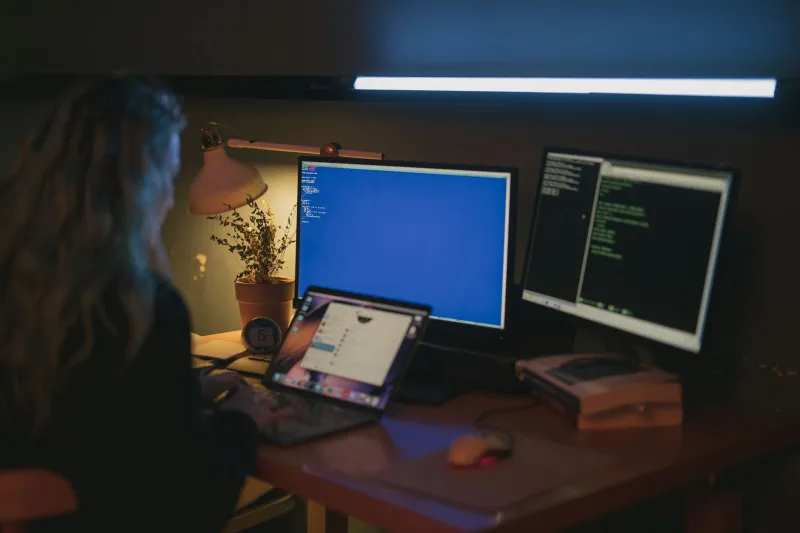
The software industry loves a hero narrative: the founder, the launch, the IPO. It has almost no vocabulary for the maintainer who, at 3 a.m. local time, fixed a memory leak in a library that 40,000 American companies depend on, and whose name nobody will ever know.
We went looking for those stories — the ones involving Russian-speaking engineers whose work quietly prevented disasters in the US software ecosystem. Some details below are anonymized or composited where maintainers requested it, because, as one put it, "attention is not a feature I asked for." But the underlying events are real, and the pattern they reveal is worth your attention.
The PostgreSQL Patch That Preempted a Payment Crisis
In 2023, a subtle interaction between a connection-pooling library and a Postgres replication setting began corrupting transaction state under rare timing conditions. A database consultant in Novosibirsk — who maintains one of the most widely used Postgres extensions in the world — traced the bug over a long weekend and shipped a fix upstream before most US financial firms had even hit the failure mode.
A senior SRE at a top-10 US payment processor later confirmed to us that the patch landed in their stack "roughly two weeks before our own monitoring would have caught it — and our monitoring is good." The near-miss never made a postmortem because, from the American side, there was nothing to postmortem. That's the point.
The Compiler Fix That Saved a Retail Black Friday
Every year, Black Friday pushes US retail infrastructure to its absolute limit, and every year, some team discovers at the worst possible moment that their toolchain has an edge case. In one documented case, a large US retailer's deployment pipeline broke two days before Thanksgiving due to a regression in a widely used build tool.
The fix came from a maintainer in Kharkiv who had been tracking the regression in a related issue thread for a week. He published a patch, walked the retailer's engineers through validation over a video call at midnight his time, and declined the offered bounty — asking instead that the company fund the project's test infrastructure. The retailer's Black Friday went off without a hitch. The maintainer's name appears nowhere in the company's incident history.
The Cryptography Library and the Silent CVE
When a critical vulnerability was disclosed in a widely deployed cryptographic library a few years back, the global scramble to patch was led in significant part by maintainers in Russia and Ukraine — engineers who, notably, were on opposite sides of a war and still coordinated on the fix thread within hours.
American banks, hospitals, and government systems all run on these libraries. The CVE got a number and a news cycle; the all-night coordination that kept the patch wave orderly got a merge commit.
Why This Pattern Exists
It would be easy to frame this as a feel-good story about individual heroes. But the pattern has structural causes worth understanding:
Deep systems education. The mathematical and low-level systems training common in post-Soviet technical universities produces engineers unusually comfortable in the layers most American developers never touch — memory, concurrency, compilers, protocols.
Open source as career capital. In job markets where Western opportunities are limited or complicated, maintaining critical infrastructure is one of the most credible signals an engineer can build. The work gets done because the incentive structure rewards it.
Timezone arbitrage of care. Much of Eastern Europe works while the US sleeps, which means the bug you file at 6 p.m. ET is often fixed before your standup.
What Americans Should Do With This
First: audit your dependency tree and figure out who actually maintains the software your revenue runs on. If a critical package is maintained by one person in a timezone twelve hours away, that's a risk — and an opportunity to fund them.
Second: pay maintainers. The engineers in these stories mostly didn't ask for money. That's precisely why the ecosystem can't keep relying on them not to.
And third: when the next big outage narrative breaks, remember that for every outage that made the news, there are dozens that didn't — because someone you'll never meet cared about an edge case more than anyone paid them to.
The American software stack is, in a real sense, held together by people whose names never trend. It might be nice to notice them before the next 3 a.m.